EYRAplex: Human T‑reg (11‑plex)
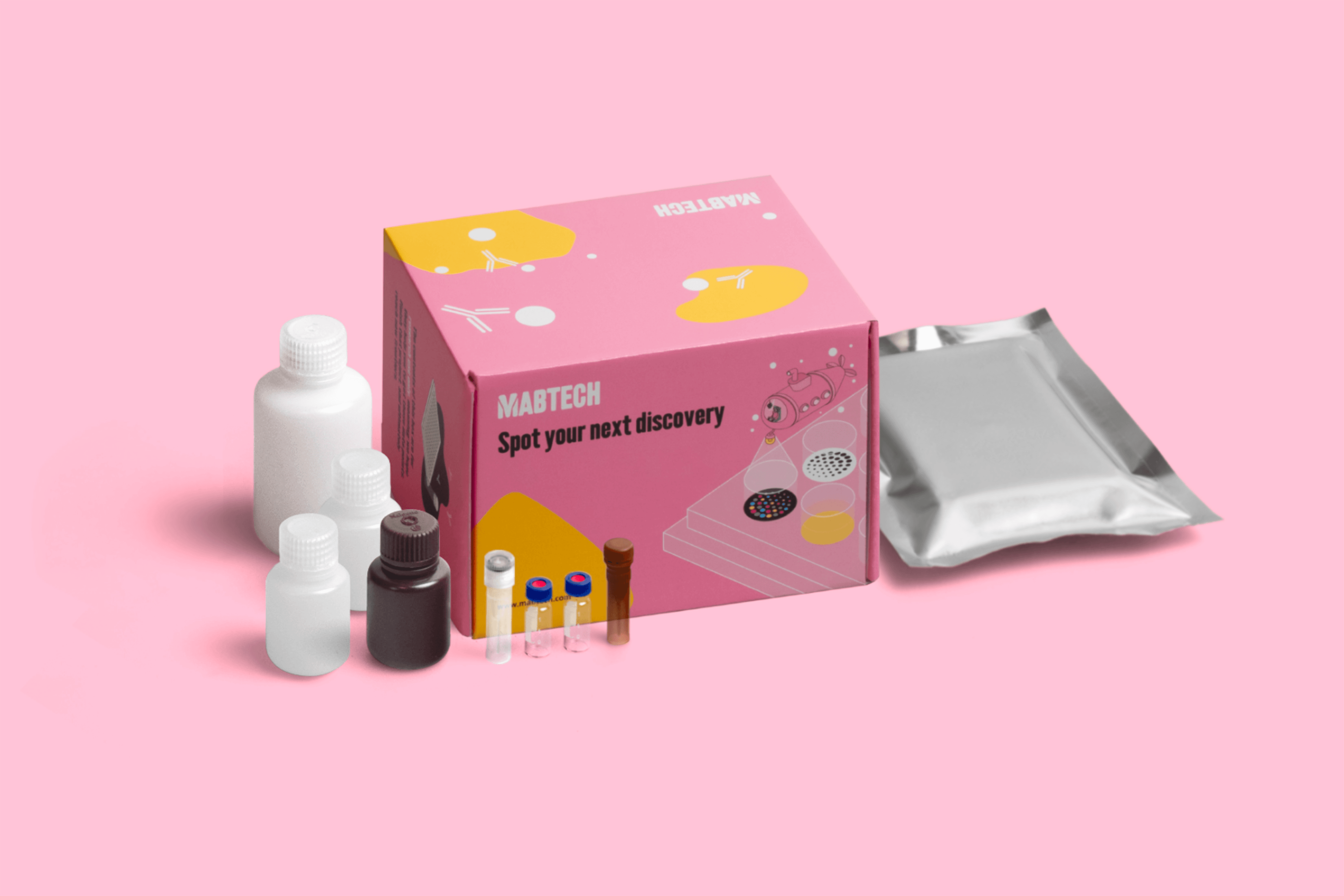

EYRAplex: Human T‑reg (11‑plex)
Components
| Capture mAb | Capture bead mix: Human T-reg (11-plex) |
| Detection mAb | Detection mAb mix: Human H1A |
| Standard | Standard mix C: EYRAplex, human |
| Fluorophore conjugate | Streptavidin-PE |
| Buffers/Solutions | Assay diluent: EYRAplex |
| Streptavidin-PE diluent | |
| Wash buffer concentrate | |
| Also provided | 96-well plate (black) |
| Adhesive plate covers | |
| Black plate lid |
In stock
Delivery within 3-4 weeks
Shipping $0
Precision
| Analyte | LOD (pg/ml) | LLOQ (pg/ml) | ULOQ (pg/ml) | Intra-assay CV(%) | Inter-assay CV(%) |
|---|---|---|---|---|---|
| CCL22 (MDC) | 2.0 | 9.8 | 10000 | 3 | 11 |
| CD25 (IL-2Rα) | 1.8 | 24.4 | 100000 | 3 | 8 |
| IFN-γ | 1.4 | 2.4 | 10000 | 3 | 9 |
| IL-2 | 0.3 | 2.4 | 10000 | 4 | 11 |
| IL-4 | 0.1 | 2.2 | 9000 | 2 | 10 |
| IL-6 | 0.3 | 3.2 | 13000 | 4 | 9 |
| IL-10 | 0.1 | 2.4 | 10000 | 3 | 11 |
| IL-13 | 1.0 | 14.6 | 15000 | 2 | 9 |
| IL-17A | 0.2 | 2.4 | 10000 | 3 | 9 |
| Perforin | 6.8 | 73.2 | 75000 | 3 | 8 |
| TGF-β1 (Latent TGF-β1) | 1.8 | 54.9 | 225000 | 5 | 12 |
Recovery
| Average recovery (%) in | ||||
|---|---|---|---|---|
| Analyte | Heparin plasma | Citrate plasma | EDTA plasma | Serum |
| CCL22 (MDC) | 97 | 100 | 91 | 131 |
| CD25 (IL-2Rα) | 56 | 63 | 59 | * |
| IFN-γ | 72 | 73 | 78 | 80 |
| IL-2 | 88 | 89 | 95 | 85 |
| IL-4 | 86 | 76 | 74 | 120 |
| IL-6 | 83 | 87 | 88 | 91 |
| IL-10 | 75 | 80 | 82 | 78 |
| IL-13 | 92 | 87 | 91 | 95 |
| IL-17A | 70 | 81 | 79 | 75 |
| Perforin | 27 | * | * | * |
| TGF-β1 (Latent TGF-β1) | 59 | 63 | 55 | 66 |
Linearity
| Average recovery (%) in | ||||
|---|---|---|---|---|
| Analyte | Heparin plasma | Citrate plasma | EDTA plasma | Serum |
| CD25 (IL-2Rα) | ** | ** | ** | 76 (1:16 - 1:128) |
| Perforin | 94 (1:16 - 1:512) | 89 (1:16 - 1:512) | 87 (1:16 - 1:512) | 83 (1:32 - 1:512) |
Average recovery (%) in
| Analyte | RA plasma |
|---|---|
| CCL22 (MDC) | 92 |
| CD25 (IL-2Rα) | 93 |
| IFN-γ | 79 |
| IL-2 | 94 |
| IL-4 | 96 |
| IL-6 | 107 |
| IL-10 | 91 |
| IL-13 | 104 |
| IL-17A | 123 |
| Perforin | 70 |
| TGF-β1 (Latent TGF-β1) | 95 |
Representative standard curves for EYRAplex: Human Treg (11-plex).




CCL22 (MDC)
| Analyte description | Chemokine ligand 22 (CCL22), also known as macrophage-derived chemokine (MDC), belongs to the CC chemokine family. CCL22 is mainly secreted by macrophages and dendritic cells and has chemoattractant activity for T cells, dendritic cells, and NK cells. CCL22 is upregulated in certain cancers, infectious diseases, and autoimmune diseases. |
| Alternative names | C-C motif chemokine ligand 22, MDC |
| Cell type | Monocyte/MΦ, mDC |
CD25 (IL-2Rα)
| Analyte description | CD25 is expressed by activated T cells, B cells, and monocytes. Tregs, responsible for regulating immune tolerance, express the highest amounts of CD25. CD25 is the IL-2 receptor α chain, which functions as one subunit of the high-affinity variant of the IL-2 receptor. When cleaved off by proteases, the soluble receptor (sIL-2Rα) is released extracellularly. Soluble CD25 has a low affinity for IL-2 and can function either as a decoy receptor reducing the activity of IL-2 or by enabling trans presentation to cells expressing the dimeric, intermediate-affinity IL-2R. Increased levels of soluble CD25 indicate ongoing immune responses, and therefore CD25 has been investigated as a biomarker for disease. For example, elevated sCD25 levels have been associated with autoimmune disorders, severe COVID-19, and some types of cancer. |
| Alternative names | CD25, cluster of differentiation 25, Interleukin-2 receptor subunit alpha, IL2RA, Tac, p55; CD25; IL2R; IMD41; TCGFR; IDDM10 |
| Cell type | T cell |
| Gene ID | 3559 |
IFN-γ
| Analyte description | Interferon-γ (IFN-γ) is the only type II interferon. This proinflammatory cytokine is secreted by activated T cells and NK cells. It activates macrophages and endothelial cells and regulates immune responses by affecting APCs, T cells, and B cells. Production of IFN-γ by helper T cells and cytotoxic T cells is a hallmark of the Th1-type phenotype. Thus, high-level production of IFN-γ is typically associated with effective host defense against intracellular pathogens. |
| Alternative names | Interferon-γ, Interferon-gamma, IFN-γ, IFN-gamma, IFN-g, IFNg, IFG, IFI, IMD69 |
| Cell type | T cell, Tc, Th1, NK cell |
| Gene ID | 3458 |
IL-2
| Analyte description | Interleukin 2 (IL-2) is predominantly produced by activated T cells. IL-2 promotes the proliferation, differentiation, and survival of antigen-activated T cells and NK cells. After antigen stimulation, the cytokine also promotes the differentiation of T cells into effector and memory T cells. Therefore IL-2 plays an important role in the body's response to infection. IL-2 is also key to tolerance, as it promotes the differentiation of certain immature T cells into regulatory T cells in the thymus, ultimately preventing autoimmune diseases. |
| Alternative names | Interleukin-2, Interleukin 2, IL-2, IL2, T cell growth factor, TCGF, lymphokine |
| Cell type | T cell, Th1, Th2, Th17, Tfh |
| Gene ID | 3558 |
IL-4
| Analyte description | Interleukin 4 (IL-4) is produced primarily by Th2 cells, mast cells, eosinophils, and basophils. IL-4 was first identified to costimulate B cell growth; the cytokine is essential for B cell secretion of IgE and augments the production of IgG1 in vivo. In addition to regulating B cell growth and immunoglobulin secretion, IL-4 also affects T cells. In vitro, IL-4 promotes T cell growth and can induce cytolytic T cell activity. IL-4 also induces the differentiation of naive CD4 T cells into Th2 cells, which are characterized by their capacity to secrete the cytokines IL-4, IL-5, and IL-10 upon activation, while simultaneously inhibiting the generation of Th1 cells. |
| Alternative names | Interleukin 4, IL-4, IL4, BCGF-1, BSF-1, BCGF1, BSF1 |
| Cell type | T cell, Th2, Treg |
| Gene ID | 3565 |
IL-6
| Analyte description | Interleukin 6 (IL-6) is a pleiotropic cytokine produced by many different cell types and plays a role in a wide range of functions, such as immune responses, acute-phase reactions, and hematopoiesis. Among other things, it augments antibody production from activated B cells in vitro. |
| Alternative names | Interleukin 6, IL-6, IL6, IFB-B502, BSF-2, BCDF, BSF2, CDF, HGF, HSF, IFN-beta-2, IFNB2 |
| Cell type | B cell, Monocyte/MΦ, mDC |
| Gene ID | 3569 |
IL-10
| Analyte description | Interleukin 10 (IL-10) is a pleiotropic cytokine produced by activated T cells and monocytes. It can modulate the functions of immune responses in both a stimulatory and an inhibitory way. IL-10 is thereby involved in the regulation of immune reactions and inflammatory responses. |
| Alternative names | Interleukin-10, IL-10, IL10, CSIF, GVHDS, IL-10A, TGIF |
| Cell type | T cell, Treg, Monocyte/MΦ, mDC |
| Gene ID | 3586 |
IL-13
| Analyte description | Interleukin 13 (IL-13) is produced by Th2-type cells, mast cells, and NK cells in response to activation. It regulates the secretion of IgE by B cells and the Th2-type cell development and suppresses inflammatory responses by regulation of macrophage function. |
| Alternative names | Interleukin 13, IL-13, IL13, P600 |
| Cell type | T cell, Th2, Treg |
| Gene ID | 3596 |
IL-17A
| Analyte description | Interleukin 17A (IL-17A) is a potent proinflammatory cytokine produced by activated Th17 (T helper 17) cells and certain cells belonging to the innate immune system. In mice, IL-17 has also been shown to be produced by activated CD8 T cells and γδ T cells. Th17 cells play an important role in autoimmune diseases and protection against bacteria and fungi. IL-17A acts on a broad range of cell types to induce the expression of cytokines, chemokines, and metalloproteinases. As a result, secretion of IL-17A promotes inflammatory responses, which leads to the recruitment of neutrophils, enhancement of antibody production, and activation of T cells. Increased expression of IL-17A is seen in autoimmune diseases such as multiple sclerosis and rheumatoid arthritis. It is also associated with asthma, psoriasis, cancer, and transplant rejection. |
| Alternative names | Interleukin 17A, IL-17A, IL17A, CTLA-8, CTLA8, IL-17, IL17, ILA17 |
| Cell type | Th17 |
| Gene ID | 3605 |
Perforin
| Analyte description | Perforin is produced by cytotoxic T cells and NK cells as an effector molecule in the cell-mediated destruction of target cells. Perforin is responsible for pore formation and facilitates the delivery of granzymes which induces apoptosis of the target cell. |
| Alternative names | Perforin, PFN |
| Cell type | T cell, Tc, Th1, Treg, NK cell |
TGF-β1 (Latent TGF-β1)
| Analyte description | Transforming growth factor β1 (TGF-β1) is secreted by many cells and controls functions such as cell growth, cell differentiation, proliferation, and apoptosis. The cytokine TGF-β1 is an important regulator of immune functions. Specifically for T cells, TGF-β1 promotes the differentiation of regulatory T cells, preventing IL-1- and IL-2-dependent proliferation of activated T cells, the activation of helper T cells, and cytotoxic T cells. TGF-β1 is secreted in a latent, biologically inactive form, non-covalently linked with a latency associated protein (LAP). |
| Alternative names | Transforming growth factor β1, TGF-β1, TGF beta 1, latency associated peptide, LAP |
| Cell type | T cell, Th1, Th17, Treg, Tfh, Monocyte/MΦ |