EYRAplex: Human Proinflammatory (12‑plex)
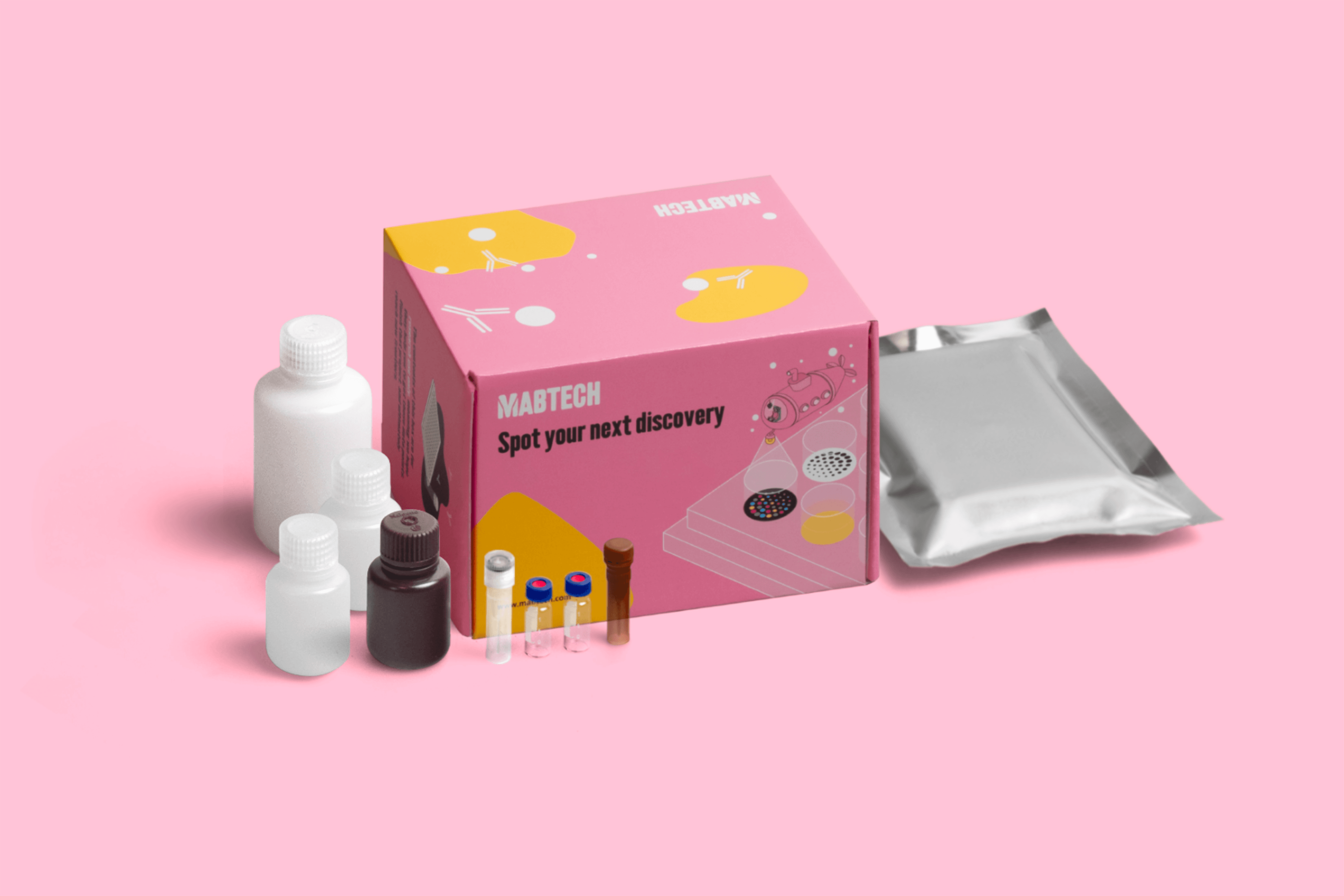

EYRAplex: Human Proinflammatory (12‑plex)
Components
| Capture mAb | Capture bead mix: Human Proinflammatory (12-plex) |
| Detection mAb | Detection mAb mix: Human H1A |
| Standard | Standard mix C: EYRAplex, human |
| Fluorophore conjugate | Streptavidin-PE |
| Buffers/Solutions | Assay diluent: EYRAplex |
| Streptavidin-PE diluent | |
| Wash buffer concentrate | |
| Also provided | 96-well plate (black) |
| Adhesive plate covers | |
| Black plate lid |
In stock
Delivery within 3-4 weeks
Shipping $0
Precision
| Analyte | LOD (pg/ml) | LLOQ (pg/ml) | ULOQ (pg/ml) | Intra-assay CV(%) | Inter-assay CV(%) |
|---|---|---|---|---|---|
| GM-CSF | 0.8 | 9.8 | 40000 | 3 | 10 |
| IFN-γ | 1.4 | 2.4 | 10000 | 3 | 9 |
| IL-1β | 0.3 | 2.9 | 12000 | 4 | 9 |
| IL-2 | 0.3 | 2.4 | 10000 | 4 | 11 |
| IL-4 | 0.1 | 2.2 | 9000 | 2 | 10 |
| IL-5 | 0.5 | 2.4 | 10000 | 5 | 12 |
| IL-6 | 0.3 | 3.2 | 13000 | 4 | 9 |
| IL-8 (CXCL8) | 0.9 | 4.9 | 20000 | 3 | 10 |
| IL-10 | 0.1 | 2.4 | 10000 | 3 | 11 |
| IL-12 (p70) | 0.3 | 3.7 | 15000 | 3 | 11 |
| IL-13 | 1.0 | 14.6 | 15000 | 2 | 9 |
| TNF-α | 1.1 | 7.3 | 7500 | 4 | 10 |
Recovery
| Average recovery (%) in | ||||
|---|---|---|---|---|
| Analyte | Heparin plasma | Citrate plasma | EDTA plasma | Serum |
| GM-CSF | 73 | 77 | 78 | 83 |
| IFN-γ | 72 | 73 | 78 | 80 |
| IL-1β | 89 | 96 | 106 | 87 |
| IL-2 | 88 | 89 | 95 | 85 |
| IL-4 | 86 | 76 | 74 | 120 |
| IL-5 | 90 | 91 | 91 | 96 |
| IL-6 | 83 | 87 | 88 | 91 |
| IL-8 (CXCL8) | 90 | 92 | 93 | 103 |
| IL-10 | 75 | 80 | 82 | 78 |
| IL-12 (p70) | 57 | 82 | 84 | 73 |
| IL-13 | 92 | 87 | 91 | 95 |
| TNF-α | 60 | 79 | 80 | 69 |
Average recovery (%) in
| Analyte | RA plasma |
|---|---|
| GM-CSF | 99 |
| IFN-γ | 79 |
| IL-1β | 101 |
| IL-2 | 94 |
| IL-4 | 96 |
| IL-5 | 102 |
| IL-6 | 107 |
| IL-8 (CXCL8) | 108 |
| IL-10 | 113 |
| IL-12 (p70) | 126 |
| IL-13 | 104 |
| TNF-α | * |
Representative standard curves for EYRAplex: Human Proinflammatory (12-plex).




GM-CSF
| Analyte description | Granulocyte macrophage-colony stimulating factor (GM-CSF) can be secreted by T cells, macrophages, endothelial cells, and fibroblasts. GM-CSF stimulates the survival and functional activities of myeloid, that is, monocytes, macrophages, DCs, neutrophils, and eosinophils. It also stimulates the differentiation and proliferation of hematological progenitors. |
| Alternative names | Granulocyte macrophage-colony stimulating factor, GM-CSF, CSF2, CSF, GMCSF |
| Cell type | T cell |
| Gene ID | 1437 |
IFN-γ
| Analyte description | Interferon-γ (IFN-γ) is the only type II interferon. This proinflammatory cytokine is secreted by activated T cells and NK cells. It activates macrophages and endothelial cells and regulates immune responses by affecting APCs, T cells, and B cells. Production of IFN-γ by helper T cells and cytotoxic T cells is a hallmark of the Th1-type phenotype. Thus, high-level production of IFN-γ is typically associated with effective host defense against intracellular pathogens. |
| Alternative names | Interferon-γ, Interferon-gamma, IFN-γ, IFN-gamma, IFN-g, IFNg, IFG, IFI, IMD69 |
| Cell type | T cell, Tc, Th1, NK cell |
| Gene ID | 3458 |
IL-1β
| Analyte description | Interleukin 1ß (IL-1ß) is a proinflammatory cytokine and inducer of acute phase responses. IL-1ß is produced primarily by monocytes, macrophages, and dendritic cells after induction by microbes. |
| Alternative names | Interleukin-1ß, IL-1ß, IL-1F2, Interleukin-1beta, IL-1 beta, IL1b, Interleukin-1 beta, IL-1, IL1-BETA, IL1F2, IL1beta |
| Cell type | Monocyte/MΦ, mDC |
| Gene ID | 3553 |
IL-2
| Analyte description | Interleukin 2 (IL-2) is predominantly produced by activated T cells. IL-2 promotes the proliferation, differentiation, and survival of antigen-activated T cells and NK cells. After antigen stimulation, the cytokine also promotes the differentiation of T cells into effector and memory T cells. Therefore IL-2 plays an important role in the body's response to infection. IL-2 is also key to tolerance, as it promotes the differentiation of certain immature T cells into regulatory T cells in the thymus, ultimately preventing autoimmune diseases. |
| Alternative names | Interleukin-2, Interleukin 2, IL-2, IL2, T cell growth factor, TCGF, lymphokine |
| Cell type | T cell, Th1, Th2, Th17, Tfh |
| Gene ID | 3558 |
IL-4
| Analyte description | Interleukin 4 (IL-4) is produced primarily by Th2 cells, mast cells, eosinophils, and basophils. IL-4 was first identified to costimulate B cell growth; the cytokine is essential for B cell secretion of IgE and augments the production of IgG1 in vivo. In addition to regulating B cell growth and immunoglobulin secretion, IL-4 also affects T cells. In vitro, IL-4 promotes T cell growth and can induce cytolytic T cell activity. IL-4 also induces the differentiation of naive CD4 T cells into Th2 cells, which are characterized by their capacity to secrete the cytokines IL-4, IL-5, and IL-10 upon activation, while simultaneously inhibiting the generation of Th1 cells. |
| Alternative names | Interleukin 4, IL-4, IL4, BCGF-1, BSF-1, BCGF1, BSF1 |
| Cell type | T cell, Th2, Treg |
| Gene ID | 3565 |
IL-5
| Analyte description | Interleukin 5 (IL-5) is a pleiotropic cytokine primarily produced by T and NK cells. IL-5 specifically controls the survival, differentiation, and chemotaxis of eosinophils. But initially, IL-5 was characterized by its ability to support the growth and terminal differentiation of B cells. |
| Alternative names | Interleukin-5, IL-5, IL5, BCGF-2, EDF, TRF |
| Cell type | T cell, Th2, NK cell |
| Gene ID | 3567 |
IL-6
| Analyte description | Interleukin 6 (IL-6) is a pleiotropic cytokine produced by many different cell types and plays a role in a wide range of functions, such as immune responses, acute-phase reactions, and hematopoiesis. Among other things, it augments antibody production from activated B cells in vitro. |
| Alternative names | Interleukin 6, IL-6, IL6, IFB-B502, BSF-2, BCDF, BSF2, CDF, HGF, HSF, IFN-beta-2, IFNB2 |
| Cell type | B cell, Monocyte/MΦ, mDC |
| Gene ID | 3569 |
IL-8 (CXCL8)
| Analyte description | Interleukin 8 (IL-8) is a proinflammatory cytokine produced by different types of cells, including monocytes, macrophages, and endothelial cells. Inflammatory stimuli, such as LPS, strongly induce IL-8 production by monocytes. |
| Alternative names | Interleukin-8, IL-8, IL8, CXCL8, GCP-1, GCP1, LECT, LUCT, LYNAP, MDNCF, MONAP, NAF, NAP-1, NAP1, SCYB8 |
| Cell type | T cell, Treg, Tfh, Monocyte/MΦ, mDC |
| Gene ID | 3576 |
IL-10
| Analyte description | Interleukin 10 (IL-10) is a pleiotropic cytokine produced by activated T cells and monocytes. It can modulate the functions of immune responses in both a stimulatory and an inhibitory way. IL-10 is thereby involved in the regulation of immune reactions and inflammatory responses. |
| Alternative names | Interleukin-10, IL-10, IL10, CSIF, GVHDS, IL-10A, TGIF |
| Cell type | T cell, Treg, Monocyte/MΦ, mDC |
| Gene ID | 3586 |
IL-12 (p70)
| Analyte description | Interleukin 12 (IL-12) is, when biologically active, a heterodimer (p70) consisting of two covalently linked subunits, p35 and p40. The p40 subunit is shared with IL-23. IL-12 is produced by antigen-presenting cells, specifically dendritic cells, and macrophages. IL-12 is a proinflammatory cytokine that promotes Th1-type responses by inducing IFN-γ production and enhancing the proliferation and cytotoxicity of NK and T cells. |
| Alternative names | Interleukin 12, IL-12, IL12 |
| Cell type | Monocyte/MΦ, mDC |
IL-13
| Analyte description | Interleukin 13 (IL-13) is produced by Th2-type cells, mast cells, and NK cells in response to activation. It regulates the secretion of IgE by B cells and the Th2-type cell development and suppresses inflammatory responses by regulation of macrophage function. |
| Alternative names | Interleukin 13, IL-13, IL13, P600 |
| Cell type | T cell, Th2, Treg |
| Gene ID | 3596 |
TNF-α
| Analyte description | Tumor necrosis factor (TNF), also known as TNF-α, is produced by many different cell types, e.g., monocytes, macrophages, T cells, and B cells. Among the many effects of TNF-α are protection against bacterial infection, cell growth modulation, immune system regulation, and involvement in septic shock. |
| Alternative names | Tumor necrosis factor-α, TNF-α, TNF-alpha, TNF-a, TNFa, Tumor necrosis factor-alpha, TNF, DIF-alpha, TNFA, TNFSF2, TNLG1F |
| Cell type | T cell, Tc, Th1, Th2, Th17, Tfh, Monocyte/MΦ |
| Gene ID | 7124 |