EYRAbeads for custom multiplex assays
Published: December 16, 2025
2 minute read
Authored by: Tyler Sandberg
Introducing EYRAbeads
We’re excited to announce the launch of EYRAbeads, the same dual-dyed, magnetic bead populations used in EYRAplex assays, designed to give researchers full freedom to build custom multiplex assays with readouts on Mabtech EYRA and on most flow cytometers. EYRAbeads are coated with millions of carboxyl groups, making them ideal for covalent coupling of almost anything you want to measure. Antibodies, cytokines, antigens, peptides, proteins, you name it! If it can be coupled, it can be multiplexed.
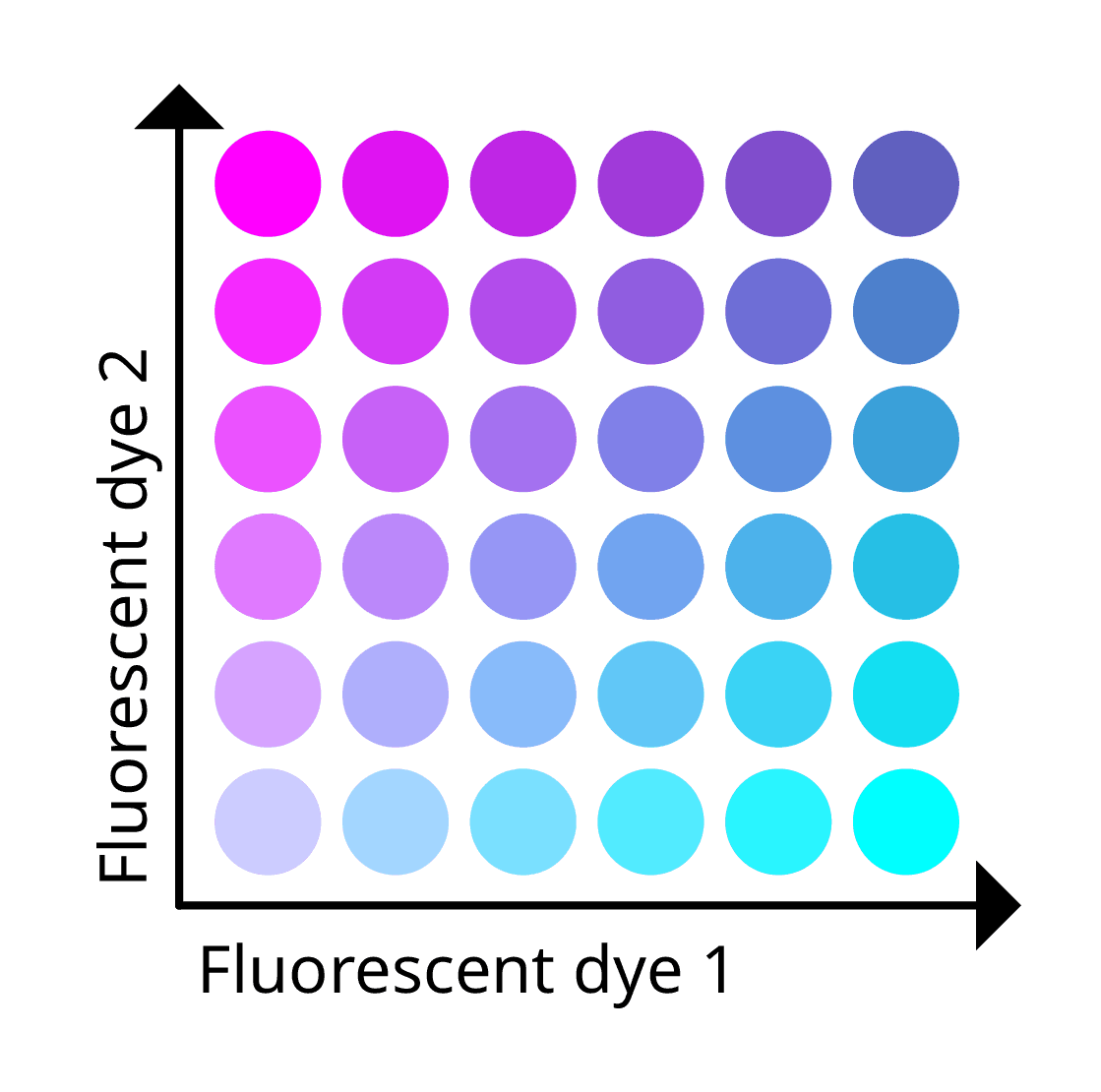
Each EYRAbead population contains a unique ratio of two fluorescent dyes (equivalent to APC and APC-Cy7), allowing clear bead identification while using a single reporter channel (PE) for detection. This means you can combine multiple bead populations in one well and quantify several targets simultaneously, saving precious sample, time, and effort.

EYRAbeads can be used to create:
- custom cytokine or biomarker panels
- antigen-specific serology assays
- epitope mapping or cross-reactivity studies
- exploratory multiplex assays where no commercial kit exists
We’re launching EYRAbeads with 9 distinct bead populations, with additional populations planned to be introduced on a rolling basis. This expanding palette will support increasingly complex multiplex designs as your assay needs grow.
And you’re not on your own. Developing custom assays doesn’t have to be a solo project. Mabtech’s Field Application Scientists are ready to help, whether that means:
- guiding you through bead coupling with your own antibodies or antigens
- optimizing assay conditions and readout
- supporting antigen-specific serology using Mabtech’s immunoglobulin-specific detection antibodies
- coming on-site to set up the custom coupling and assay
We'll be with you every step of the way to help you drive your custom assay and discoveries forward. And check out our latest Tech-note on how we developed a custom multiplex serology assay here!
Explore all the available populations and read through our recommended coupling protocol for antibodies by clicking the button below.